The fall 2009 courses in Moodle are now open. We're ready to start posting e-reserves when you are!
Questions about e-reserves? Click here or call Sonja at x7564.
Monday, July 06, 2009


Sunday, May 24, 2009
Summer Reading - Now You Can

When the last paper is handed in, the final exam taken, you might finally find yourself with time to read. We know, you read all the time - but the rigors of the semester can keep you from reading something just for fun.
Maybe you've always meant to tackle War and Peace or that Jane Austen novel your mother loves. Or maybe you've seen something intriguing in a library display. But you live in Bemidji and you don't want to come all the way back to return some books in a few weeks.
Now you can check books out of the library - for the whole summer! Just ask, and we will extend your due dates until September.
This idea comes courtesy of a smart student. Got more ideas? We'd like to hear them.
photo courtesy of Amos Moses Griffin
Thursday, May 21, 2009
Extended Hours
The library extends its open hours to meet the needs of students needing spaces to study, printers to print papers, or group study availability.
Main Library Hours
Thursday & Friday - 8:00am - 2:00am
Sat. - 8:00am - 10:00pm
Sunday & Monday - 8:00am - 2:00am
Tuesday - 8:00am - 4:45pm
Music Library
Fri. - 8am - 4:30pm
Sat. 12:00pm - 4:00pm
Sun. - 1:00pm - 9:00pm
Monday - 8:00am - 11:00pm
Tues. - 8:00am - 12:00pm
Good luck to everyone with finals and have a safe and fun summer break!
Main Library Hours
Thursday & Friday - 8:00am - 2:00am
Sat. - 8:00am - 10:00pm
Sunday & Monday - 8:00am - 2:00am
Tuesday - 8:00am - 4:45pm
Music Library
Fri. - 8am - 4:30pm
Sat. 12:00pm - 4:00pm
Sun. - 1:00pm - 9:00pm
Monday - 8:00am - 11:00pm
Tues. - 8:00am - 12:00pm
Good luck to everyone with finals and have a safe and fun summer break!
Saturday, May 02, 2009
Find It - Eventually
It may be a little tricky to "find it!" on Sunday, May 3rd. That is, the little yellow "find it!" buttons that link citations in the library's databases to full text, print, or interlibrary loan options will be switched off starting at 4a.m. and may remain unavailable into the early afternoon. With any luck, the server should be up an running again before too long.
Meanwhile, you can check availability of a particular journal in print by searching its title in MnPALS or in electronic full text by browsing through these title lists -
Meanwhile, you can check availability of a particular journal in print by searching its title in MnPALS or in electronic full text by browsing through these title lists -
Monday, April 27, 2009
Author Tea, This Thursday
Join members of the Gustavus community as we celebrate books written by our faculty in the past year. There will be short and extremely entertaining presentations by the authors - and refreshments! So stop by the Courtyard Cafe at 4:15 on Thursday, April 30th, to join the fun. These are the books and authors we're celebrating:


Behling, an associate professor of English, presents a study of the mutilated and fragmented body that appears in United States literature in the nineteenth and early twentieth centuries. These violations of the body suggest a deep concern about human identity, one structured on both fragmentation and augmentation of the body. The mutilated body, willfully damaged by weapons of war and machines of industry, politics and economics, is at the heart of the texts in this study, and serve not only as harbingers of a loss of identity to come, but also embody the unknown and unknowable self.

Stompin’ at the Grand Terrace: A Jazz Memoir in Verse by Philip Bryant
Bryant, a professor of English, presents a new collection of poems and prose pieces in a celebration of family, history, culture, and Chicago’s South Side. Through his poems, Bryan reveals how music forges friendships, communities, and dreams, and how jazz — America’s great original art form — holds the power of possibility to transcend the widest of racial, social, and cultural gaps. An accompanying CD features more than a dozen original compositions — inspired by Bryant’s poems — by renowned jazz pianist Carolyn Wilkins.

Greek Theatre in Context by Eric Dugdale
Dugdale, an associate professor of classics, offers a valuable guide to Greek threatre. The book presents a broad selection of key ancient sources, both visual and literary, about all aspects of performance — including actors, masks, stage props, and choral dancing — as well as scenes from the plays themselves that offer insights to their staging, plots, and reception.

Sophocles: Electra by Eric Dugdale
Dugdale brings classical Greek drama vividly to life in this series of new translations. Students are encouraged to engaged with the text through detailed commentaries, which include suggestions for discussion and analysis.
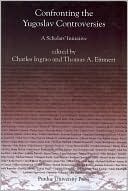
Confronting the Yugoslav Controveries edited by Tom Emmert
Emmert, a professor of history, helped direct an international consortium of historians, social scientists, and jurists to examine the salient controversies that still divide the peoples of the former Yugoslavia. The book presents a direct assault on the proprietary narratives and interpretations that nationalist politicians and media have impressed on mass culture in the successor states of Bosnia and Herzegovina, Croatia, Kosova, Macedonia, Montenegro, Serbia, and Slovenia.
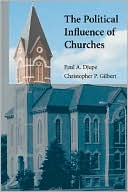
The Political Influence of Churches by Chris Gilbert
Gilbert, a professor of political science, along with lead author Paul Djupe ‘93, investigate how membership in organized religious bodies shapes the political life of members. They develop a theoretical framework that captures the multifaceted elements of church life that affect individual political attitudes and actions. The book is based on a 1998-2000 study of ELCA and Episcopal congregations, conducted with the assistance of more than 20 Gustavus undergraduate students through a National Science Foundation grant.
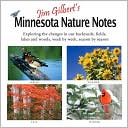
Jim Gilbert’s Minnesota Nature Notes by Jim Gilbert
Gilbert, visiting instructor of environmental studies and longtime campus naturalist, through a series of brief essays and remarks focused on each passing week of the year, shares his experiences with observing the changing Minnesota seasons. The wide range of topics include animal tracking in the snow, apple-blossom time, and tapping maple trees.
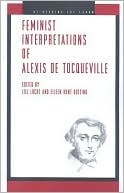
Feminist Interpretations of Alexis de Tocqueville by Jill Locke
Locke, an associate professor of political science, emphasizes the relationship of Tocqueville’s life and work to modern feminist thought. The book reveals a tidal shift in the reception history of Tocqueville as a result of his serious engagement by feminist, gender, postcolonial, and critical race theorists.

Severed Ties and Silenced Voices by Roger McKnight
McKnight, a professor and acting chair of the Scandinavian studies department, presents a social history of immigrant times, encapsulated in the life histories of Lars Johnson, his wife Caroline, and their nearest neighbor and his family. The story bridges the Old World and New World experience through an account of cultural assimilation, broken relationships, family tragedy, and the search for personal fulfillment in difficult times.
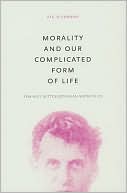
Morality and Our Complicated Form of Life: Feminist Wittgensteinian Metaethics by Peg O’Connor
O’Connor, a professor of gender, women, and sexuality studies and philosophy, draws inspiration from the later Wittgenstein’s philosophy to develop a new approach to the grounding of ethics (i.e., metaethics) that looks to the interconnected nature of social practices, most especially those that Wittgenstein called “language games.” These language-games provide structure and stability to our moral lives at the same time as they permit the flexibility to accommodate change in moral understandings and attitudes.
(descriptions taken from a Gustavus news release.)
news release.
Monday, April 20, 2009
The Writing Center is Back!

Maybe you're staring at a blank page on your computer screen and you think to yourself "I have no idea where to start with this assignment." Or you just wrote yourself into a place where you think "this isn't working." Or you finished a draft of an assignment and you just reread the instructions for what you were supposed to do and realize - oh, no. I should have read this first. Or you know, you just know, you and punctuation have a bad relationship and you need counseling if you're ever going to get along.
The Writing Center can help. And now you can meet one of the writing center professionals in the library. Katy Young can be found in room 211, the small room with the big computer screen near the even bigger computer lab on the main floor, on Mondays (2-5pm), Wednesdays (2-5pm), Thursdays (2-10pm), and Sundays (7-10pm). Make an appointment online or just drop by.
Katy's particular specialty is working with English language learners, about which she knows a lot - but also with anyone learning to write - which basically covers all of us, no matter how long we've been at it.

Don't let it get you down. Go to the writing center!
CC-licensed photos courtesy of Jonno Witts
Friday, April 17, 2009
Get A Room
The library is pleased to announce the second administration of the Research Practices Survey, part of a national study undertaken by two higher education organizations, NITLE and HEDS. The survey will help us understand the research skills students bring to college and the ways those skills change over the first year.
If you're a first year student, watch for an email coming to your inbox with a link to the survey. Once you take the survey, you'll be entered in a drawing to win one of several finals care packages or - our grand prize - your very own private study room in the library for fall 2009!
Help us provide even better service to first year students - and possibly win your very own study room. It only takes a few minutes!
If you're a first year student, watch for an email coming to your inbox with a link to the survey. Once you take the survey, you'll be entered in a drawing to win one of several finals care packages or - our grand prize - your very own private study room in the library for fall 2009!
Help us provide even better service to first year students - and possibly win your very own study room. It only takes a few minutes!
Tuesday, April 14, 2009
Happy National Library Week
To celebrate, we're picking your brain. There's a very short survey for students available in the library - or you might catch someone tabling for the survey near the Marketplace. Or you can even take it online. Just click Here to take the survey. Whatever your preference - we want to know what you think about the library.
Meanwhile, to indulge in a bit of library-mania, Curious Expeditions has collected "a compendium of beautiful libraries." Or you could mull over their metaphysical aspects by reading Jorge Luis Borges's story "The Library of Babel."
Meanwhile, to indulge in a bit of library-mania, Curious Expeditions has collected "a compendium of beautiful libraries." Or you could mull over their metaphysical aspects by reading Jorge Luis Borges's story "The Library of Babel."
Thursday, April 09, 2009
R-E-S-P-E-C-T

The song by Aretha Franklin comes to mind, but I really want to discuss the lack of respect I am seeing in our attitude of NOT returning dishes to the Market Place. On April 6, I arrived to work to find the Gustie Ware receptacle overflowing with not only Gustie Ware, but mugs, silverware, dishes, and every conceivable utensil from the Market Place. I assisted our heroic dish room staff, who picks up daily, in walking the dirty dishes back to the dish room.
I have seen many campus libraries during my career at Gustavus and am always so proud to return because we have the cleanest library of them all. Our custodial staff works very hard to keep our library clean and respectable but their caring hands are being over burdened these days by the amount of dishes being left here and there throughout our building. (Not to mention the wonderful dish room staff who wash all our dishes!)
Gustie Ware was introduced as a ground breaking idea for campus to cut back on the use of disposable paper boxes. The library isn’t discouraging you from enjoying your meal while you study, we are instead hoping that students will take the initiative, notice the valuable options of Gustie Ware, and begin returning dirty dishes themselves. Please respect your surroundings and the people who work to keep a clean building in which to use wonderful resources the library provides.
Wednesday, March 18, 2009
CCI - submit abstracts today!
Today is the deadline for participating in this year's Celebration of Creative Inquiry to be held on May 1st. You can fill out a form at the Kendall Center Website to have your research or creative project considered for inclusion. It's a great event, and a wonderful place to share your work. More information can be found at the Website. Or take a look at last year's inaugural event to see how much fun it was.
Tuesday, March 17, 2009
Ain't No Sunshine
It's National Sunshine Week - an annual effort to highlight the importance of transparency in government. Though journalists are the primary organizers, the importance of freedom of information extends to all of us. (You knew our library is part of the Federal Depository library system, didn't you? That's why we have publications ranging from US Geological Survey reports to the Watergate hearings on our shelves.)
However, the news is anything but sunny. The latest State of the News Media report was issued on Monday, and it's the bleakest ever. Americans go online for their news these days, and news organizations haven't figured out how to pay their bills as they meet their readership there.
However, the news is anything but sunny. The latest State of the News Media report was issued on Monday, and it's the bleakest ever. Americans go online for their news these days, and news organizations haven't figured out how to pay their bills as they meet their readership there.
Even before the recession, the fundamental question facing journalism was whether the news industry could win a race against the clock for survival: could it find new ways to underwrite the gathering of news online, while using the declining revenue of the old platforms to finance the transition?
In the last year, two important things happened that have effectively shortened the time left on that clock.
First, the hastening audience migration to the Web means the news industry has to reinvent itself sooner than it thought—even if most of those people are going to traditional news destinations. At least in the short run, a bigger online audience has worsened things for legacy news sites, not helped them.
Then came the collapsing economy. The numbers are only guesses, but executives estimate that the recession at least doubled the revenue losses in the news industry in 2008, perhaps more in network television. Even more important, it swamped most of the efforts at finding new sources of revenue. In trying to reinvent the business, 2008 may have been a lost year, and 2009 threatens to be the same.
Imagine someone about to begin physical therapy following a stroke, suddenly contracting a debilitating secondary illness.
Journalism, deluded by its profitability and fearful of technology, let others outside the industry steal chance after chance online. By 2008, the industry had finally begun to get serious. Now the global recession has made that harder. . . .
Much of what we have noted in the past holds true. The old media have held onto their audience even as consumers migrate online. In 2008, audience gains at sites offering legacy news were far larger than those for new media. The old norms of traditional journalism continue to have value. And when you look at the numbers closely, consumers are not just retreating to ideological places for news.
The problem facing American journalism is not fundamentally an audience problem or a credibility problem. It is a revenue problem—the decoupling, as we have described it before, of advertising from news.
Meanwhile, Time Magazine calls the Strib is one of the ten most endangered newspapers in the country - and they predict most of them will fail in the next 18 months. The failure of the fourth estate is very troubling for our society's ability to know what's going on. If we want news - and all the evidence suggests we consume it just as hungrily as ever - we're going to have to figure out a new way to fund news gathering.
Monday, March 16, 2009
Software upgrade during spring break
The library will be undergoing a software upgrade this weekend (March 21-22). Although those of you preparing for a spring break in warmer climes won't care, others may notice a few glitches when using the library catalog or other online resources.
Specifically, our usual interlibrary loan forms and methods won't be available while we upgrade. In the meantime, you can use this form to request books or articles.
Specifically, our usual interlibrary loan forms and methods won't be available while we upgrade. In the meantime, you can use this form to request books or articles.
Tuesday, March 03, 2009
CCI Abstracts Due

Don't forget - submissions for the second annual Celebration of Creative Inquiry are due on March 18th. This is a wonderful showcase for student research, scholarship, and creativity that will be held on May 1st. Share your work - join the fun.
The submission form is available at the Kendall Center Website. Students need to have a faculty sponsor. In April there will be workshops for students who aren't quite sure what a poster should look like or how to put one together for a particular project.
Curious? Check out abstracts from last year - or view a slide how of photos from the event.
Thursday, February 19, 2009
Is hope copyrighted?
Confused about copyright and fair use? You're not alone.
Read about a contemporary copyright conundrum involving the campaign of President Obama and what one copyright expert has to say about it.
The library can help if you have questions about copyright. Stop by and chat with us.
Read about a contemporary copyright conundrum involving the campaign of President Obama and what one copyright expert has to say about it.
The library can help if you have questions about copyright. Stop by and chat with us.
Wednesday, February 11, 2009
Darwin's Birthday @ the library
On Thursday, February 12th, we're marking the 200th birthday of Charles Darwin and the 150th anniversary of the publication of his paradigm-shifting book, On the Origin of Species. We'll mark the occasion from 2-4 pm with cake and conversation. At 2:30 Alan Gishlick, Professor of Geology, will give a talk about Darwin and his contribution to science. He has also collected a number of rare 19th century works relating to Darwin that are on exhibit on the main floor. Thanks, Dr. Gishlick!
In addition to the books and magazines on display in the library - all of which can be checked out - the web has lots of interesting material on Darwin and his role in science, society, history, and contemporary culture. Here's a sampling.
All Things Darwin
Darwin 200: A Nature News Special
This premier science journal provides a selection of articles, opinions, reflections on Darwin in the arts, and resources.
Darwin 200
A British organization providing information and events around the 200th anniversary of Darwin's birth.
Happy Birthday, Charles Darwin (Scientific American - a special issue of the magazine devoted to Darwin)
Darwin's life and work
The Complete Works of Charles Darwin Online (Cambridge University)
The Darwin Digital Library (American Museum of Natural History)
Darwin (American Museum of Natural History - the website of a 2005-2006 exhibit on his life, his work, and evolution today)
On Darwin's 'On the Origin of Species' (New York Times)
Darwin today
AAAS Dialogue on Science, Ethics, and Religion (American Association for the Advancement of Science)
Discovery Institute (the Website of an organization promoting the theory of Intelligent Design along with other political and social ideas; they sponsor a website to promote debate in opposition to evolution on Darwin's birthday)
Evolution Controversy (a summary of constitutional law issues around teaching evolution; part of a website on Exploring Constitutional Law)
Intelligent Designs on Evolution (American Radio Works)
On Darwin's 200th Birthday, Americans Still Divided About Evolution (Pew Research Center)
Taking Issue: Evolution and Religion (NPR)
And now for something a little silly . . .
Darwin Awards (rather tasteless collection of stories about stupid behavior)
"Evolutionists Flock to Darwin-Shaped Wall Stain" (The Onion)
In addition to the books and magazines on display in the library - all of which can be checked out - the web has lots of interesting material on Darwin and his role in science, society, history, and contemporary culture. Here's a sampling.
All Things Darwin
Darwin 200: A Nature News Special
This premier science journal provides a selection of articles, opinions, reflections on Darwin in the arts, and resources.
Darwin 200
A British organization providing information and events around the 200th anniversary of Darwin's birth.
Happy Birthday, Charles Darwin (Scientific American - a special issue of the magazine devoted to Darwin)
Darwin's life and work
The Complete Works of Charles Darwin Online (Cambridge University)
The Darwin Digital Library (American Museum of Natural History)
Darwin (American Museum of Natural History - the website of a 2005-2006 exhibit on his life, his work, and evolution today)
On Darwin's 'On the Origin of Species' (New York Times)
Darwin today
AAAS Dialogue on Science, Ethics, and Religion (American Association for the Advancement of Science)
Discovery Institute (the Website of an organization promoting the theory of Intelligent Design along with other political and social ideas; they sponsor a website to promote debate in opposition to evolution on Darwin's birthday)
Evolution Controversy (a summary of constitutional law issues around teaching evolution; part of a website on Exploring Constitutional Law)
Intelligent Designs on Evolution (American Radio Works)
On Darwin's 200th Birthday, Americans Still Divided About Evolution (Pew Research Center)
Taking Issue: Evolution and Religion (NPR)
And now for something a little silly . . .
Darwin Awards (rather tasteless collection of stories about stupid behavior)
"Evolutionists Flock to Darwin-Shaped Wall Stain" (The Onion)
Wednesday, February 04, 2009
Sage Advice - and News for Chemists
We have two changes in our database offerings.
1. Sage Premier now includes the full text of over 500 Sage Publishing journals in a variety of subject areas. You may search all Sage journals together, or you may limit your search to one of ten collections: Communication Studies, Criminology, Education, Health Sciences, Management & Organization Studies, Materials Science, Political Science, Psychology, Sociology, and Urban Studies & Planning. If you've used one of these subject-specific collections in the past, you'll notice a new search interface as well as more journals and a deeper backfile. And if you're wondering why we're expanding these collections when dollars are tight - well, it's a package deal, a prix fixe, a one-size-fits-all deal. No substitutions, no special orders. You want ten of those journals, help yourself, but you have to pay for the entire buffet.
That said, there are many great full-text journals in there, so help yourselves - and return for dessert as often as you like.
2. Attention chemists! SciFinder web version is now available. We're transitioning from the client version (the version we've been using until now) to the web version; only the web version will be available after April 10, 2009. Follow the instructions on our SciFinder web version page to register for an account from on campus; once you register and respond to the registration confirmation e-mail from on campus, you'll be able to use the web version from off campus.
Questions or problems? Contact e-resources@gustavus.edu.
Wednesday, January 28, 2009
Authors and Scientists @ the Library

The very first week of the spring semester will be a busy one for visitors and celebrations. On February 10th, Minnesota writer William Kent Krueger will be on campus to speak about his books and discuss the writing process. He is the author of the Cork O'Connor mystery series set in northern Minnesota in the borderlands of Anishinaabe/Anglo culture. Join us February 10th at 2:30 in the Courtyard Cafe to talk with this four-time winner of the Minnesota Book Award. The library is one of the sponsors of his visit; he will also make a public presentation at Trinity Lutheran Church at 7:30 pm as part of the ongoing St. Peter Reads program.
Then on Thursday, February 12th come to the library between 2 and 4 p.m. to celebrate Charles Darwin's birthday. It's the 200th anniversary of his birth, and the 150th anniversary of the publication of On the Origin of Species. More information will follow . . . but mark your calendars. The new semester will be here before you know it!

Friday, January 23, 2009
Get Ready to Celebrate Creative Inquiry
Planning has begun for the second annual Celebration of Creative Inquiry, an event that highlights the creative and scholarly work done by Gustavus students. So mark your calendar for May 1st, from 7 to 9 pm. See a slide show or read the abstracts from last year's event.
Students can apply to present their projects at the event by using an online submission form. Each application must have a faculty sponsor. The deadline for applications is March 18th.
Not sure how to make a poster of your research? No worries. There will be a workshop for putting posters together in mid-April.
Students can apply to present their projects at the event by using an online submission form. Each application must have a faculty sponsor. The deadline for applications is March 18th.
Not sure how to make a poster of your research? No worries. There will be a workshop for putting posters together in mid-April.
Monday, January 19, 2009
Celebrate Responsible Scientific Inquiry...
...with cake! Mark your calendars - on February 12, the library will be hosting an event in recognition of Darwin Day.
Marking the anniversary of Darwin's birth "expresses gratitude for the enormous benefits that scientific knowledge, acquired through human curiosity and ingenuity, has contributed to the advancement of humanity," at least according to the Darwin Day website.
Watch for more details coming soon!
Marking the anniversary of Darwin's birth "expresses gratitude for the enormous benefits that scientific knowledge, acquired through human curiosity and ingenuity, has contributed to the advancement of humanity," at least according to the Darwin Day website.
Watch for more details coming soon!
Tuesday, January 13, 2009
Curl Up With a Good Book
Maybe you have a little extra time on your hands during January - but no desire to clean out your drawers or go out into the frigid air. Now's your chance to catch up on reading, just for fun.
In case you aren't sure what to read, the library has some selections on display in the new seating area (where the Interlibrary Loan office used to be). Students enrolled in the "Books and Culture" course have made some selections of books they recommend. And we have a section for the armchair traveler - books set in foreign locales for those of us who didn't get to go abroad this J-term.
You can also browse our displays of books for diversity and on China as part of the Global Insight program. And if you still haven't found the book that grabs you, try one of these tools.
In case you aren't sure what to read, the library has some selections on display in the new seating area (where the Interlibrary Loan office used to be). Students enrolled in the "Books and Culture" course have made some selections of books they recommend. And we have a section for the armchair traveler - books set in foreign locales for those of us who didn't get to go abroad this J-term.
You can also browse our displays of books for diversity and on China as part of the Global Insight program. And if you still haven't found the book that grabs you, try one of these tools.
- Fiction Finder (on campus only) - this database groups books by similarity. Choose it from the right-hand side options of Books in Print.
- Gnooks - try either Gnod's suggestions or the literature map to find writers whose work is like other writers
- LibraryThing - a site where over half a million people have cataloged their books - 32 million of them. You can search by "tags" - user-generated subject terms - to find books you might be interested in.
- Lit Lists - links to "best of" lists of all kinds.
- Novelist (on campus or use your barcode and last name to access) - includes recommended reading and author read-alikes.
- OCLC Fiction Finder - an experimental catalog of fiction that you can search or browse by topic.
- Whichbook - put in your preferences on sliding scales, get lists of books to match.
- Writers Read - a blog where writers recommend books they're reading.
Subscribe to:
Posts (Atom)